The Walk: An almost straight-line walk along the shared walkway/cycleway alongside Reconciliation Drive.
Distance: 2 km
Time: 30 minutes
|
|
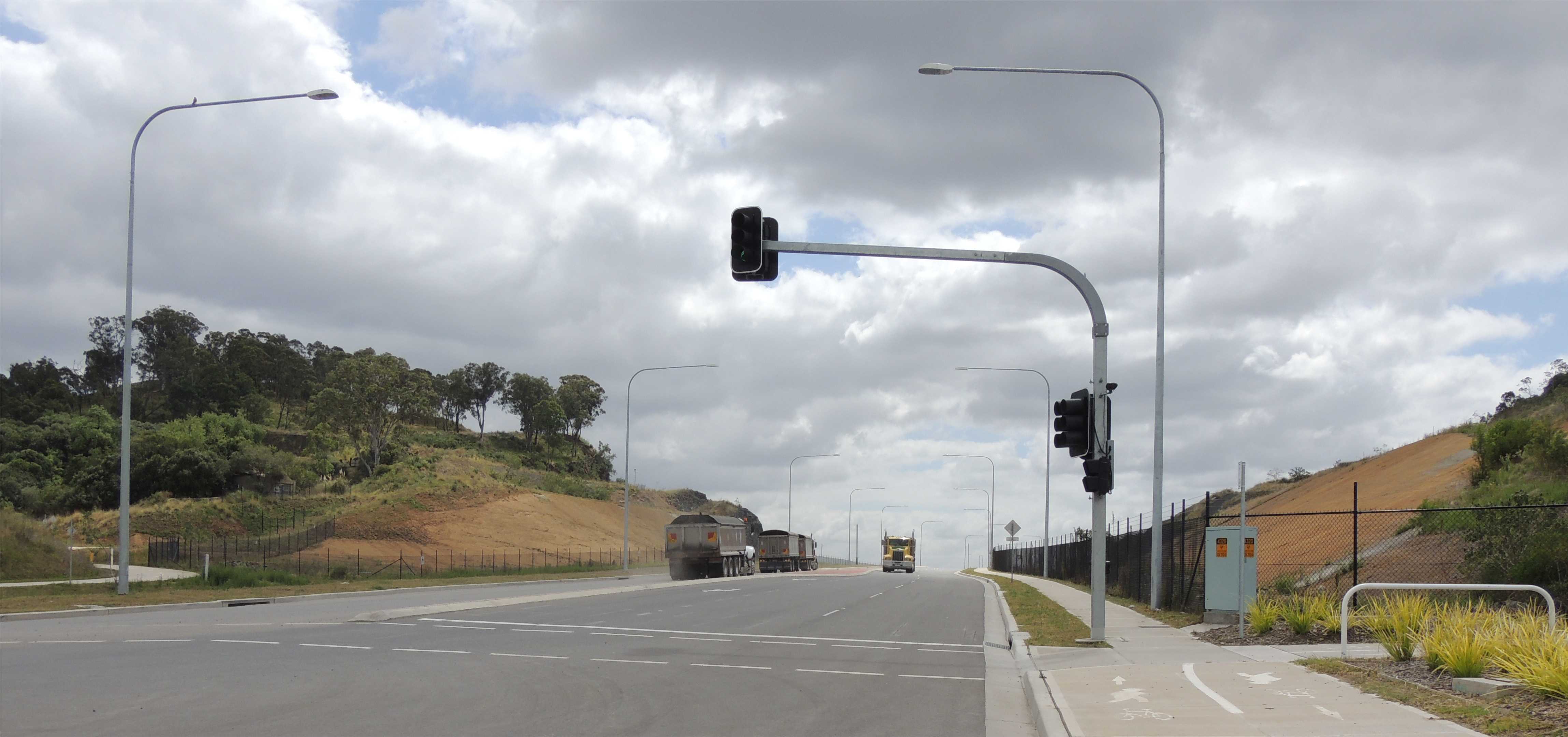
This new walk section enables two (or possibly three) circular walks to be planned which are shorter then the full Circular Walk. Please refer to the map on the Circular Walk page where this new walk section is shown in pale blue. Although the walk section is monotonous underfoot, it is the only section of any walk which provides views of the "inside" of Prospect Hill, with the near-vertical cliff faces created by quarrying over the last hundred years or so. Until this year, these views have only been seen by quarry workers.
Start the walk section from the traffic lights where the Canal reserve walkway/cycleway crosses Reconciliation Road. Walk uphill along the new (2012) walkway alongside the road. You are walking through the Gap, a man-made break in the ridge that is Prospect Hill. It is difficult to imagine that the hills on your left and right were once joined by a more or less level ridge which has been completely removed by quarrying. After about five to ten minutes, as you pass a junction to a road only a few metres long on the left, you are starting to see the massive quarried cliffs of the inside of Prospect Hill. The left wall looks more or less level all the way along until a slight rise to the summit of Water Tower Hill with its Two Water Towers. Close by on the right, a slight rise in the right-hand or western wall is what I have called the South Summit.
Continue along Reconciliation Road round a gentle left bend to the junction with Basalt Road which you will reach in about another five minutes. Here you are nearly at the centre of Prospect Hill and can appreciate that it is an oval shaped ridge, open at the northern end towards which you have been walking. Look straight down Basalt Road and then upwards and you will see One-Tree Hill with its huge Moreton Bay Fig Tree. You can see that this hill is a promontory sticking out from, and higher than, the main ridge. It wasn't always like that. The crest of the ridge has actually been quarried away so that what we see as the crest today is further away from us, and lower, than the original crest. The fig tree was originally on the crest of the hill but is now left on an isolated bluff sticking out towards us.
|
|
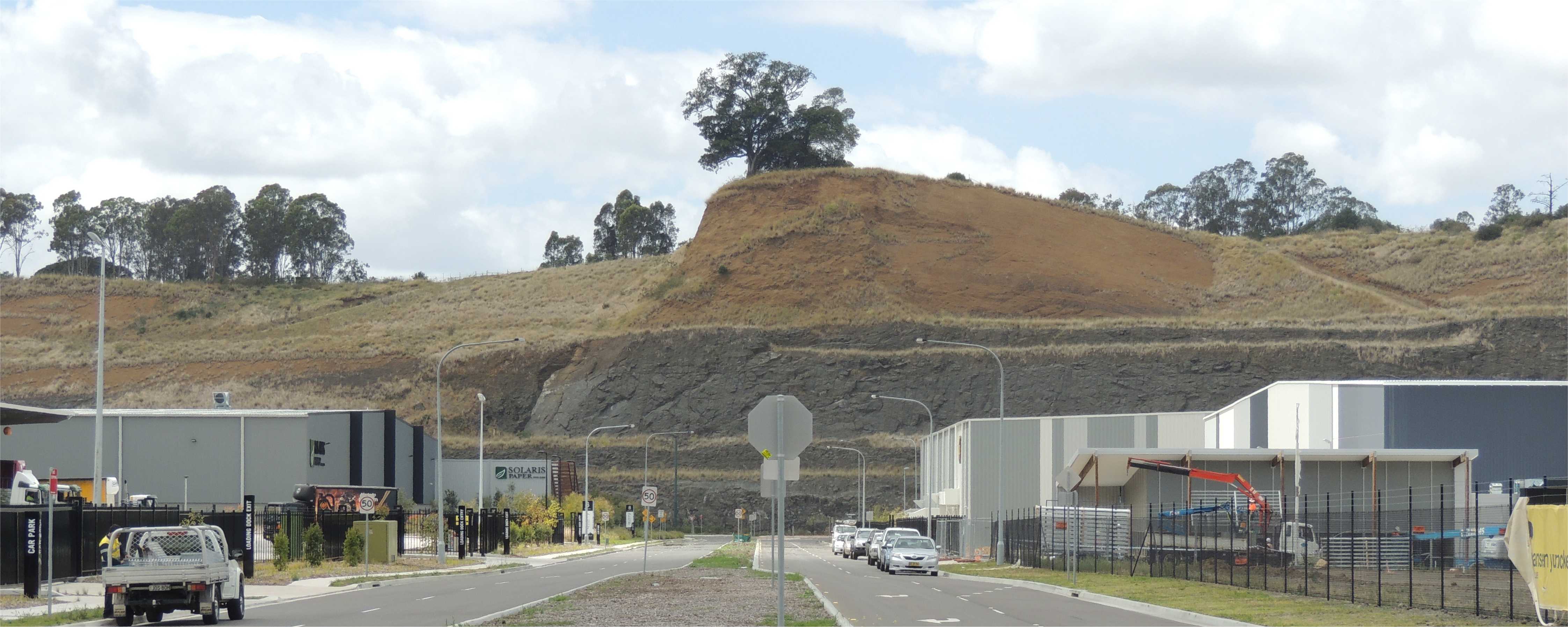
The fig tree marks the site of the original house named Grey Stanes, which was built and owned by Nelson Lawson, third son of William Lawson the explorer and settler of Veteran Hall. From our viewpoint here, Grey Stanes was actually in front of the tree, a location which is now clearly in mid-air some 30 metres above the quarry floor! The orginal highest point of Prospect Hill was a short distance to the right of the house. Its location is thus also in mid-air above the quarry floor. It was 131 metres above sea level and several metres above the present ridge height.
The ridge dips gently to the left of One Tree Hill before rising to the present highest summit of Prospect Hill which I have called Greystanes Hill, visible [above the Cadbury-Schweppes building? - this needs checking]. The furthest summit, Prospect Lookout is not visible now as our viewpoint is too low.
Walk on for about a further fifteen minutes when the median strip of the road widens and a footpath crosses over the road. This is the end of this Link Walk. You can join the walk section called Short Cut A, either to cross the road to walk to Andrew Campbell Reserve, or to continue straight on in order to walk to Pemulwuy. In either case start the page at the heading "Continuation."